
Overview
Click tracking is available on select Apollo plans. If you need to use click tracking, upgrade your plan. If you have questions about upgrading, reach out to the Apollo sales team.
Click tracking shows you when a prospect clicks a link in your email, so you can identify interest, gauge intent, and prioritize follow-ups. Clicks are often a stronger signal than email opens because they reflect an action your recipient chose to take — whether it's scheduling a meeting, visiting a page, or downloading a resource of yours.
When you enable click tracking, Apollo replaces your original links with unique tracking URLs. When a prospect clicks, they're briefly routed through Apollo's secure tracking domain, which logs the event before redirecting them to their original destination. This process is invisible to the prospect but allows you to measure which links get traction and when.
Click tracking is most effective when used in short, well-targeted campaigns with trustworthy links. Too many links — or links without a branded tracking domain — can negatively impact deliverability. To reduce risk, Apollo strongly recommends using a custom tracking subdomain before you enable click tracking. Then only use click tracking strategically to understand when prospects are most engaged.
Regulators in France and Italy issued guidelines in 2026 regarding the use of tracking pixels in email marketing.
If you conduct email marketing to residents in France or Italy, you may be required to obtain recipients' prior consent for certain types of email tracking. Review your email marketing practices and confirm that you have obtained applicable consent for click tracking. If necessary, use GDPR settings on Apollo to prohibit tracking on emails sent to people in the European Union.Check out the following sections to enable click tracking and report on results.
Enable Click Tracking
Nice to know:
- Click tracking is enabled per user. When you enable click tracking, it applies to all of your connected mailboxes. It isn't possible to pick and choose which of your mailboxes use tracking.
- Admin on Apollo can enable or disable click tracking for individual users. If you want your whole team to use it, each person needs to have it enabled.
- Click tracking isn't retroactive. It begins once you enable it on Apollo.
- Standard tracking links expire after one month.
- To deactivate click tracking, return to Email settings and uncheck Enable click tracking.
Before you use click tracking, Apollo strongly recommends that you set up a custom tracking subdomain. If you haven't, or can't use a tracking subdomain, you should turn off both click and open tracking to protect your domain reputation.
You can manage click tracking for yourself, or if you're an admin on Apollo, for your team:
- Launch Apollo and go to Settings > Profile > Email settings.
- Check Enable click tracking.
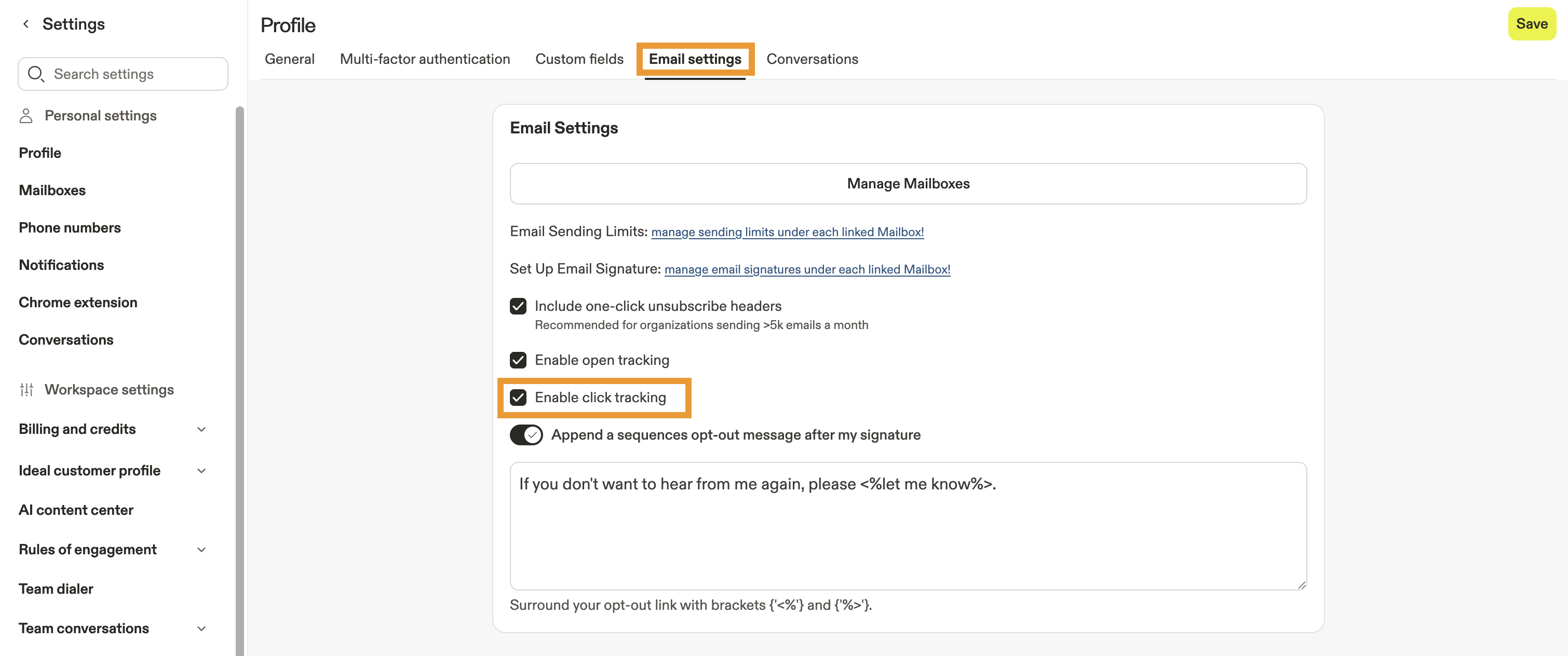
You have now enabled click tracking.
When you send emails in Apollo, Apollo automatically tracks which links get clicked and when. Check out how to report on click tracking, or browse answers to some frequently asked questions about tracking.
To manage click tracking for other users, you need to be an admin on Apollo.
- Launch Apollo and go to Settings > Email setup and health > Mailboxes.
- Select one or more mailboxes, then click Tracking.
- Click Enable under Click tracking.
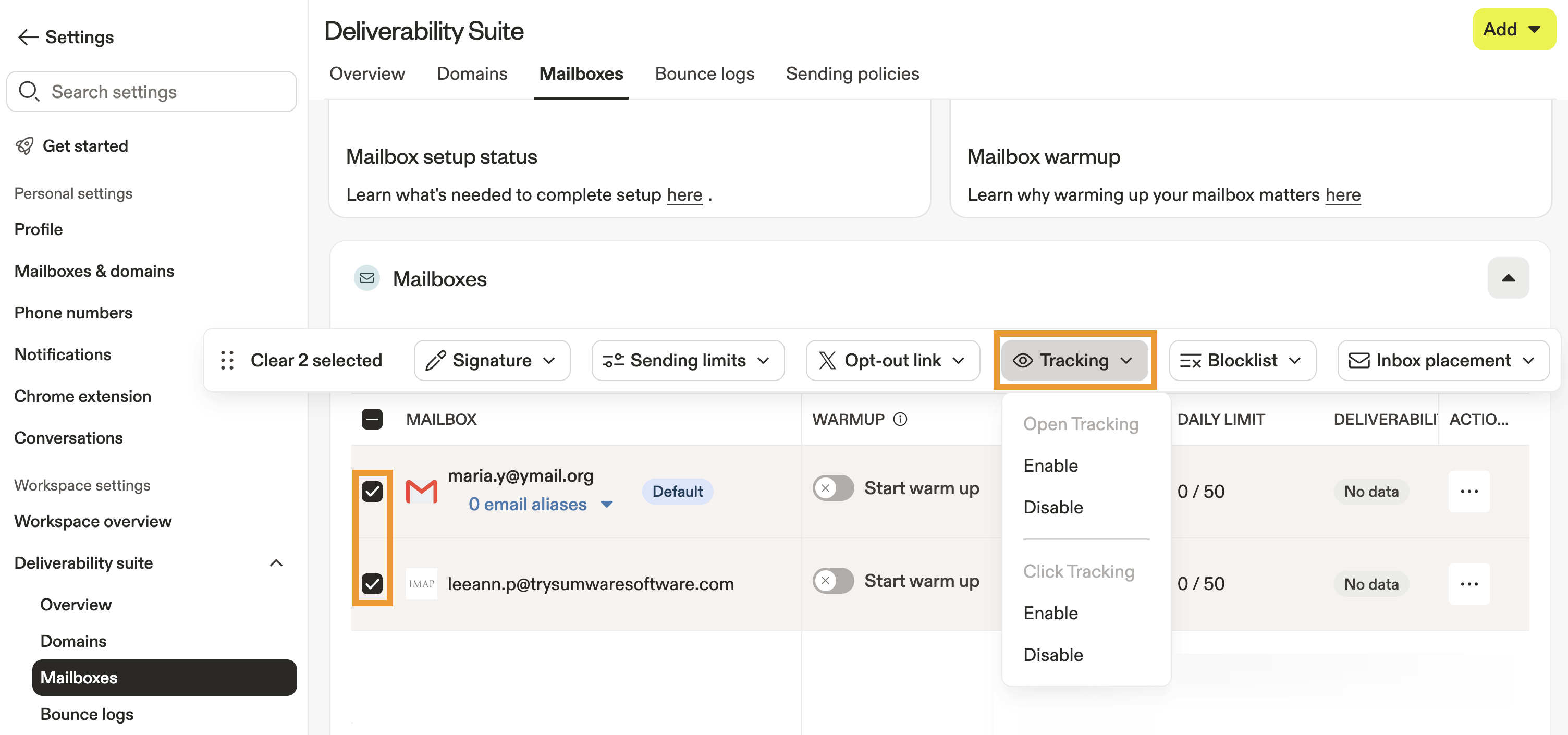
You have now enabled click tracking for the selected users.
When these users send emails in Apollo, Apollo automatically tracks which links get clicked and when. Check out how to report on click tracking, or browse answers to some frequently asked questions about tracking.
FAQs
| Frequently asked questions | ||
|---|---|---|
| What's the difference between click tracking and open tracking? | How does click tracking work? | Does click tracking hurt email deliverability or increase spam filtering? |
| Can I track clicks for links to external documents or attachments? | How do I report on the number of clicks my emails receive? | How does Apollo handle bot clicks, and can I filter them out? |
What's the difference between click tracking and open tracking?
Open tracking logs when an email is opened using an invisible image pixel. Click tracking, on the other hand, monitors when a link is clicked. Opens can be triggered by bots or image previews, while clicks are usually stronger intent signals because they require user interaction, though they can be impacted by bot clicks as well.
How does click tracking work?
Apollo tracks clicks by replacing the original link in your email with a unique tracking link that redirects to the destination. When a recipient clicks, they're first routed through Apollo's tracking domain, like go.apollo.io, which logs the event, then immediately redirected to the original link. This enables Apollo to record click activity without interrupting the user experience.
Does click tracking hurt email deliverability or increase spam filtering?
Click tracking can contribute to deliverability issues if overused or if the tracking domain becomes associated with spam. However, Apollo mitigates this by giving you the option to set up a branded tracking subdomain, which helps protect your reputation and avoids the default shared domain. Still, including too many links, especially tracked ones, can trigger filters, so it's best to use click tracking sparingly, in time-bound campaigns with trustworthy linked content.
Can I track clicks for links to external documents or attachments?
Yes, any hyperlink inserted in an Apollo email, including links to PDFs, Calendly, Google Docs, or other websites can be tracked if click tracking is enabled for the sequence or individual email. You'll see the click activity in Apollo under the activity feed for the contact and in reporting.
How do I report on the number of clicks my emails receive?
You can track click activity from several areas in Apollo:
| Reports | Navigate to Analytics > Reports, and click to create a custom report to show total clicks, clicks rates, and choose whether to include or exclude bot clicks. Filter by sequence, team, or user. |
|---|---|
| Emails | Navigate to Emails to filter for clicked emails. |
| Sequences | Navigate to Sequences and click into a specific sequence to see statistics including click rate per individual. |
To learn more, check out Report on Sequences.
How does Apollo handle bot clicks, and can I filter them out?
Click tracking on Apollo, like all sales engagement platforms, can sometimes register "false" clicks from email security bots. These bots scan emails and click every link to check for malicious content before delivering the message to the recipient. Apollo attempts to identify and filter out bot clicks based on behavior patterns. When reporting on clicks in sequences or reports, you can choose whether to include or exclude bot clicks. To reduce noise, look for follow-up actions, like replies or website visits, to confirm genuine interest.
Next Steps
Keep up the momentum with these next steps:
| Email Deliverability Best Practices | Learn how to improve deliverability, avoid spam folders, and increase response rates. Apollo's guide covers domain setup, sending behavior, and writing emails that sound human and authentic. |
|---|---|
| Set Up a Custom Tracking Subdomain | Improve tracking accuracy and protect your sender reputation by setting up a branded subdomain. |
| Use Open Tracking | Monitor how recipients engage with your outreach with open tracking on Apollo. |
| Email Tracking Overview | Learn how Apollo tracks opens and clicks and how to interpret your email engagement data. |
| Use an A/B Test in a Sequence | Run A/B tests in your sequences to compare subject lines, messaging, or timing. Use the results alongside open and click rates to find out what drives engagement. |