
Overview
The Apollo Chrome Extension lets you automate follow-ups directly in Gmail, helping you reduce manual work and stay on top of your pipeline. When sending an email, you can add multiple recipients from the same thread to a follow-up sequence.
This article guides you through the steps to add contacts to follow-up sequences.
Add Contacts to Follow-up Sequences with the Apollo Chrome Extension
To add contacts to a follow-up sequence from an email:
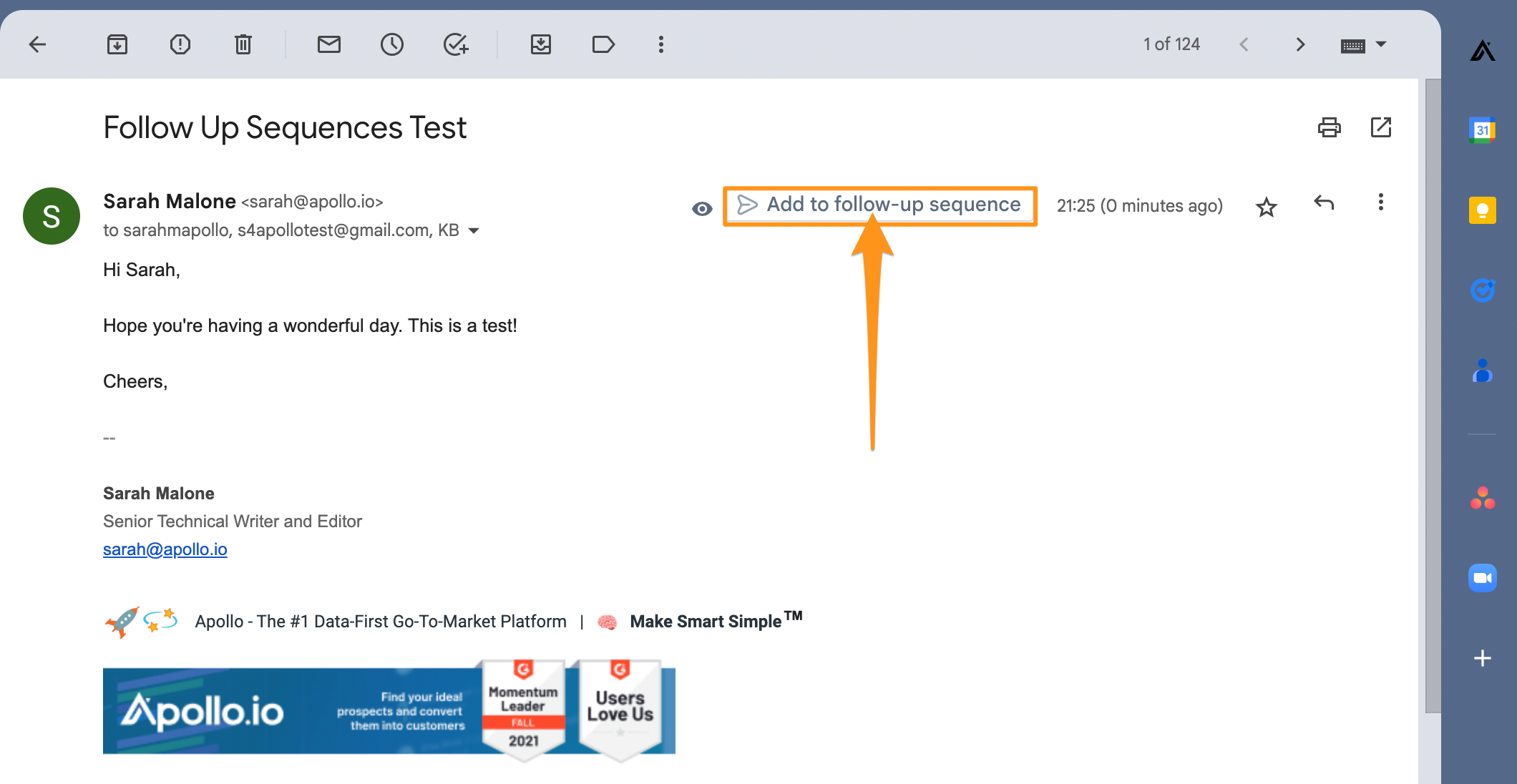
- Launch Gmail and open the email with the contact.
- Click Add to follow-up sequence.
- Select a sequence, and click Continue.
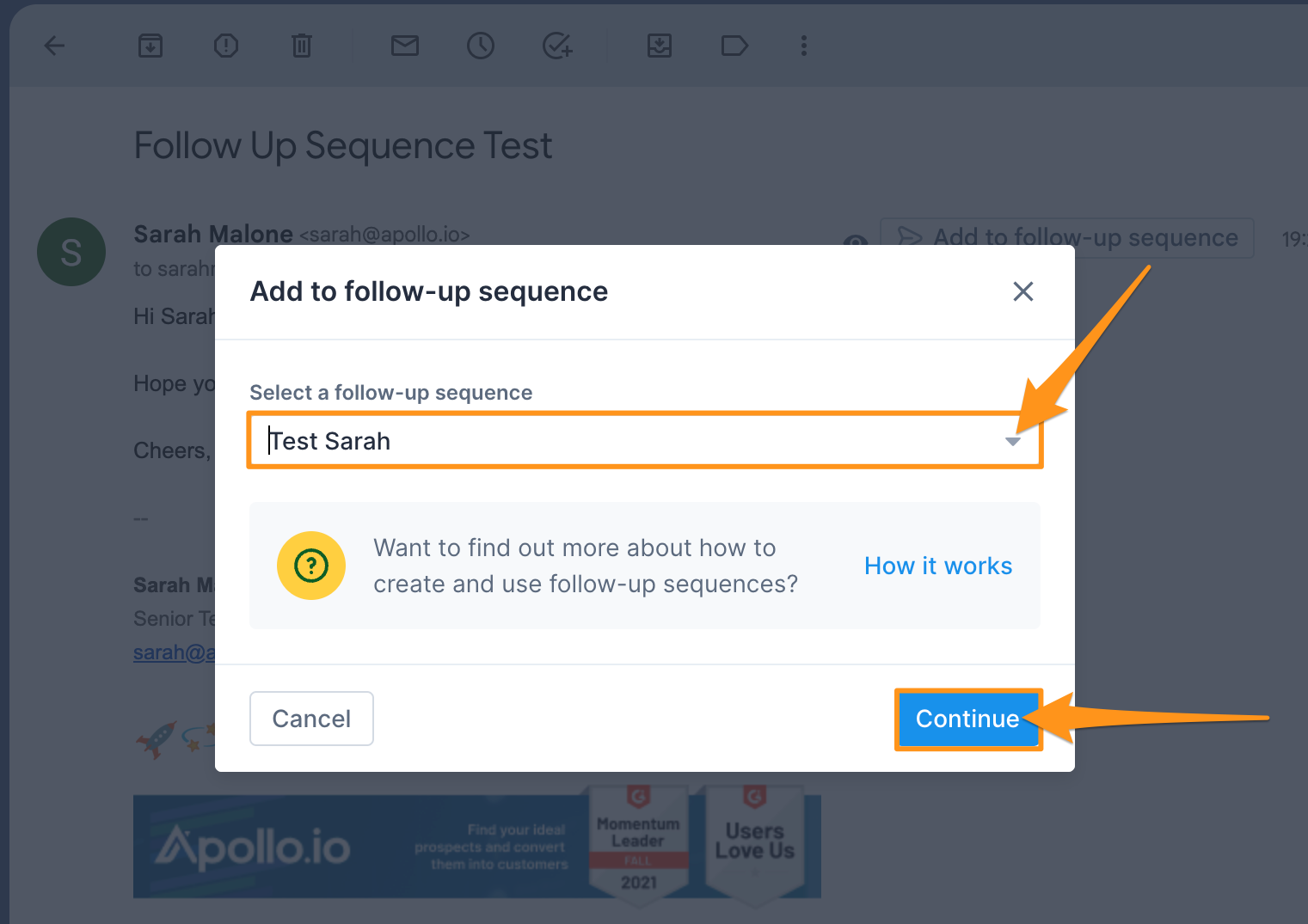
Apollo follows your sequence step settings when you add contacts to follow-up sequences with the Apollo Chrome Extension. Want your follow-ups to stay in the same email thread? Just set the first step's type of your follow-up sequence to Reply.

- (Optional) To view a brief outline of the steps in the selected sequence, click See steps.
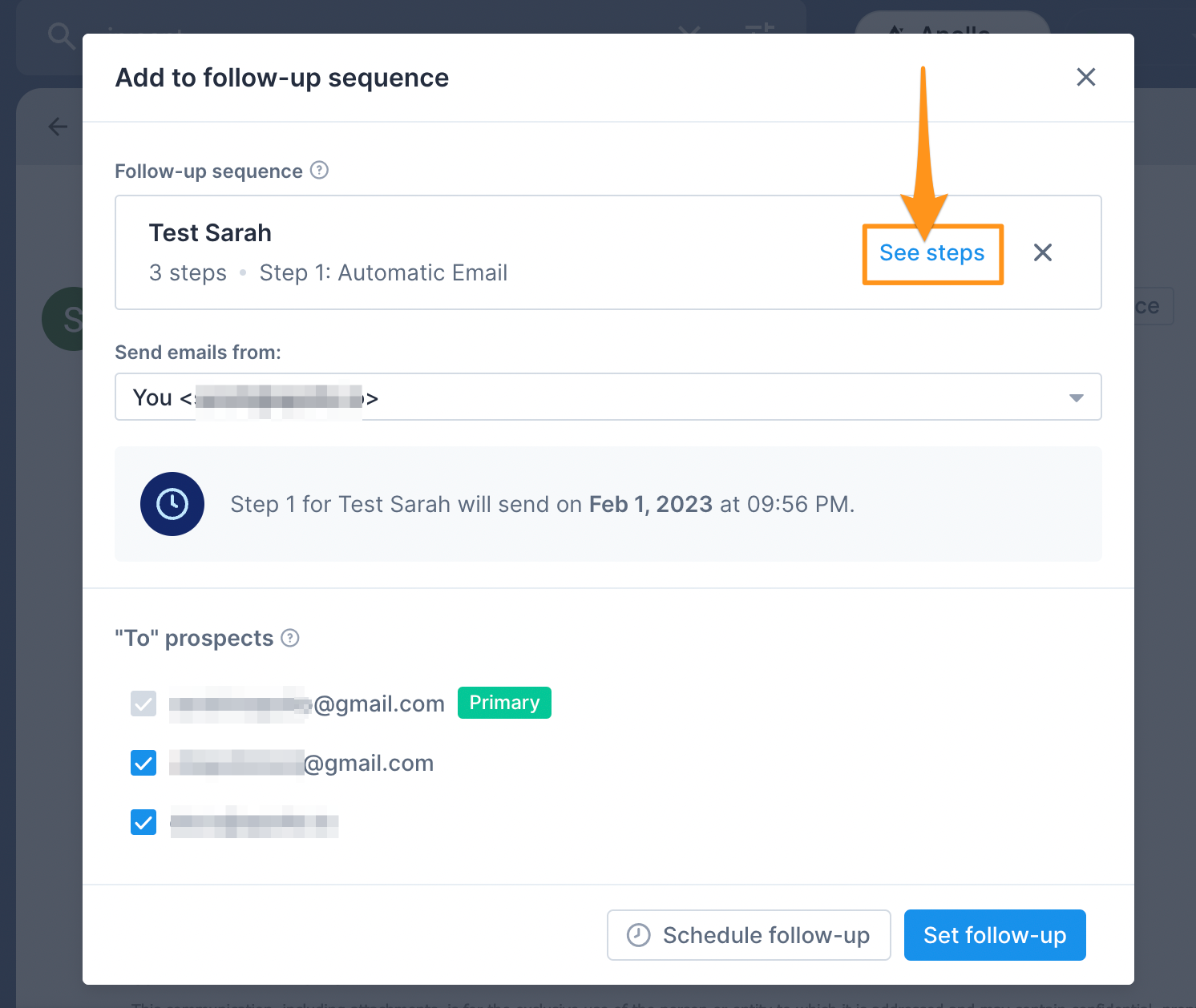
Tailor your follow-up messages to the specific needs and pain points of your prospect. For example, if you just shared a demo and are following up to try and close the deal, your messaging should differ greatly from that to a contact who's been ghosting you. Check out Create a Sequence to learn more about creating and managing sequences. For some helpful tips to create powerful messaging for your sequences, review How to Write Effective Sales Emails.
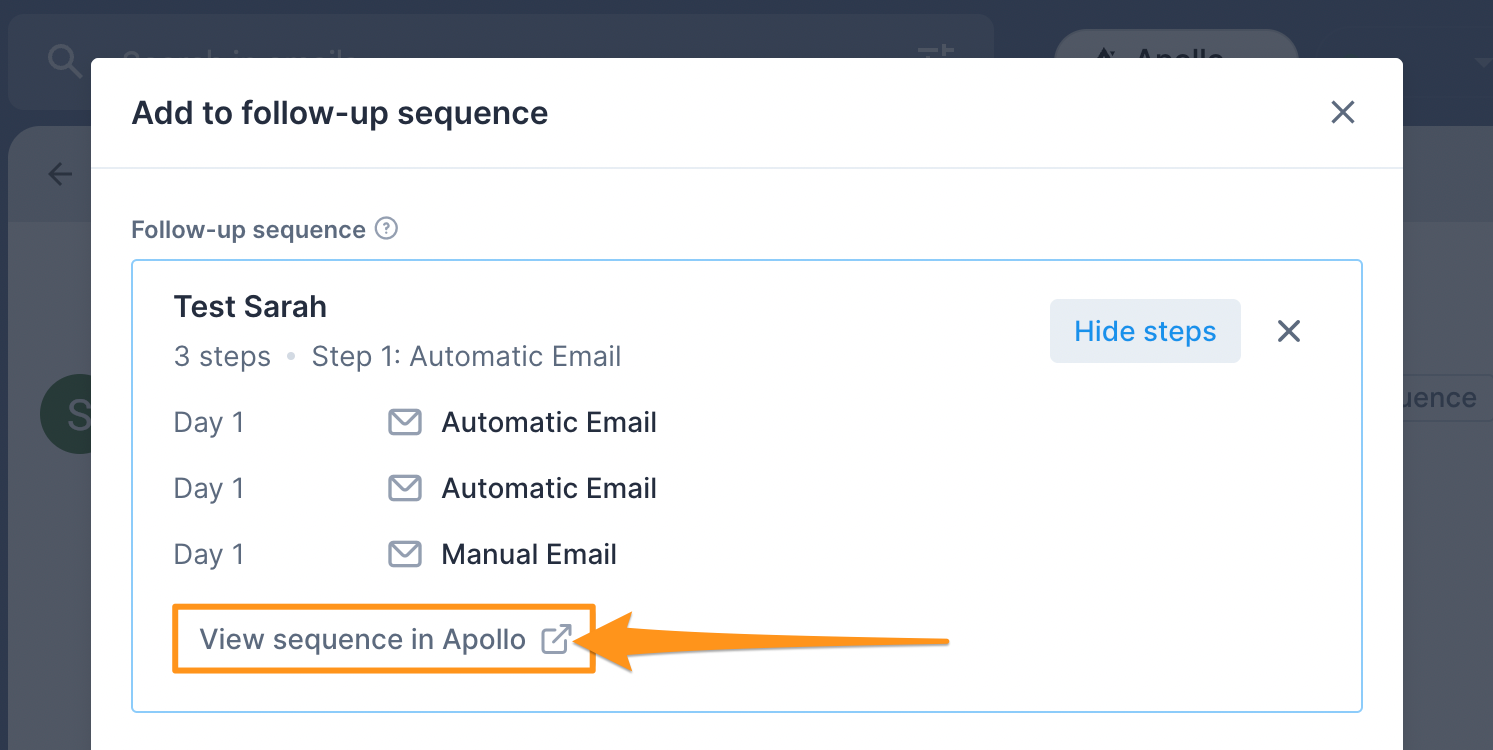
- (Optional) Click View sequence in Apollo to make any edits to the sequence before enrolling contacts.
- Apollo uses your default mailbox to send sequence emails. Select another mailbox if needed.

- If there are multiple recipients in the email, choose a primary contact. Hover your mouse over the contact, then click Set primary.
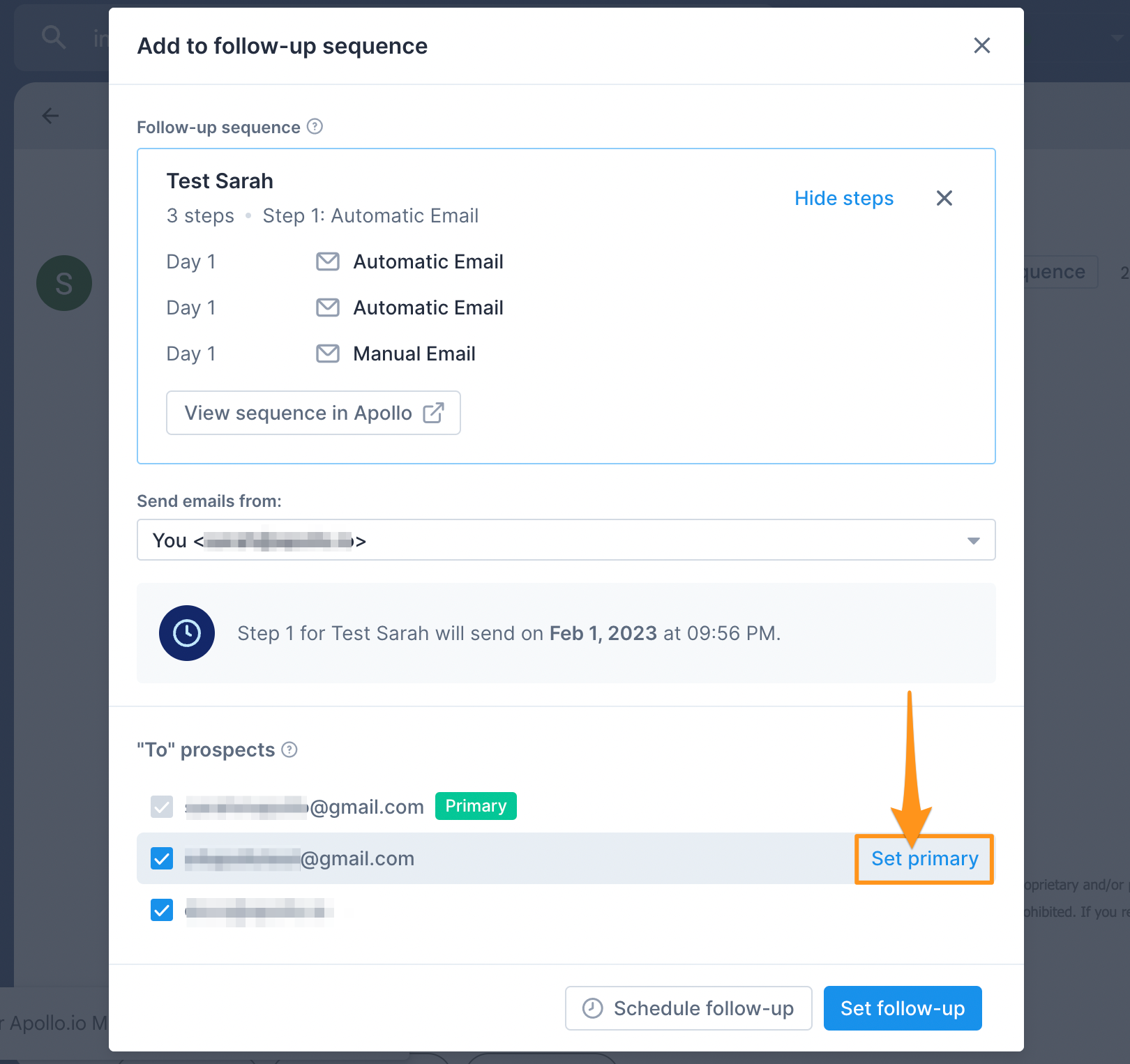
When you add multiple recipients to a follow-up sequence, the primary contact is the main contact for emailing and managing sequence status. Apollo displays the other recipients on the activity feed of the primary contact. Apollo also uses the primary contact for the sequence ruleset. For example, if you set the sequence to finish when a contact responds, Apollo only stops the sequence if the primary contact responds. You can only set the same primary contact in one email thread per sequence.
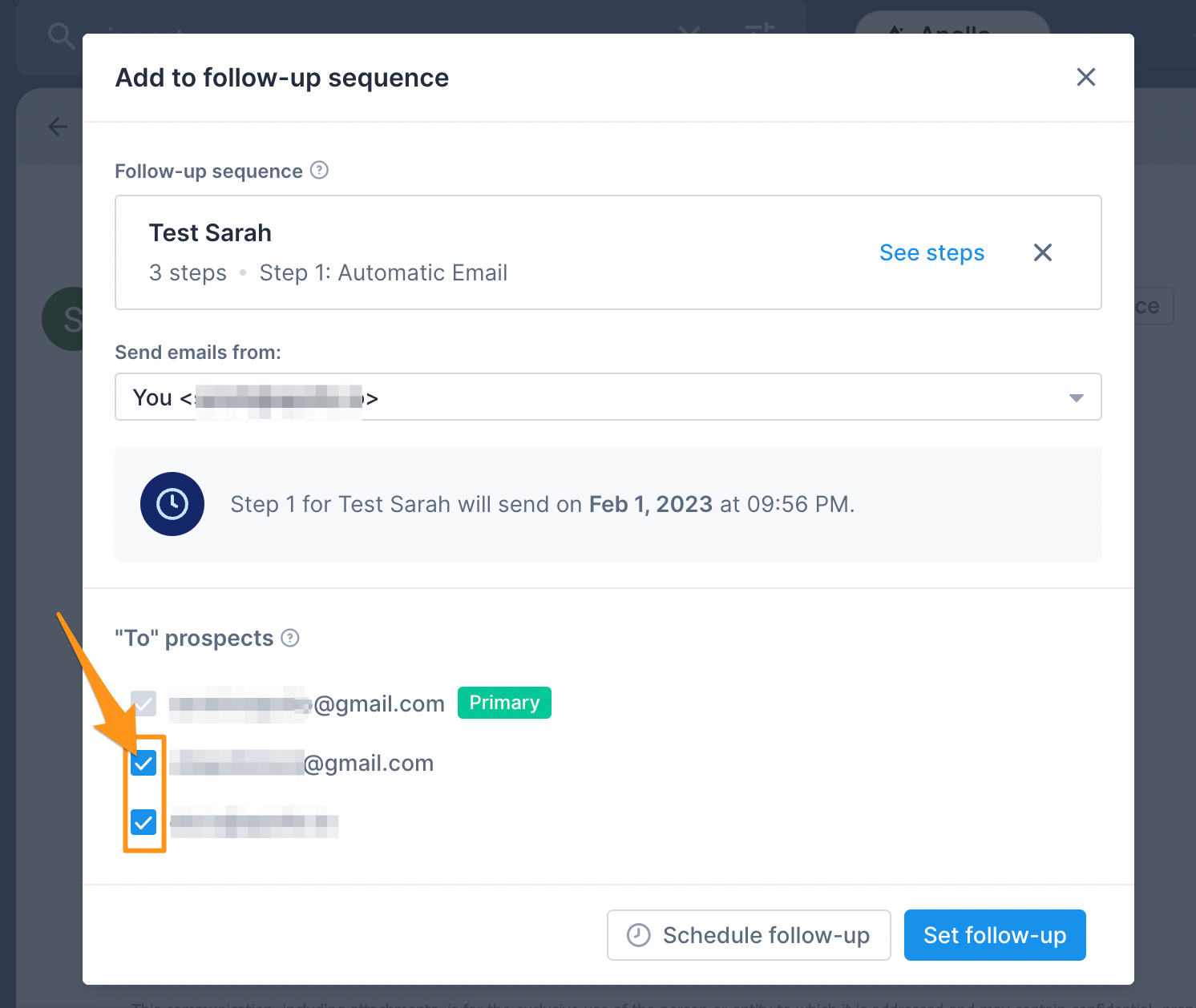
- If you want to remove any recipients from the follow-up sequence, uncheck the contact's name. You can't uncheck the primary contact.
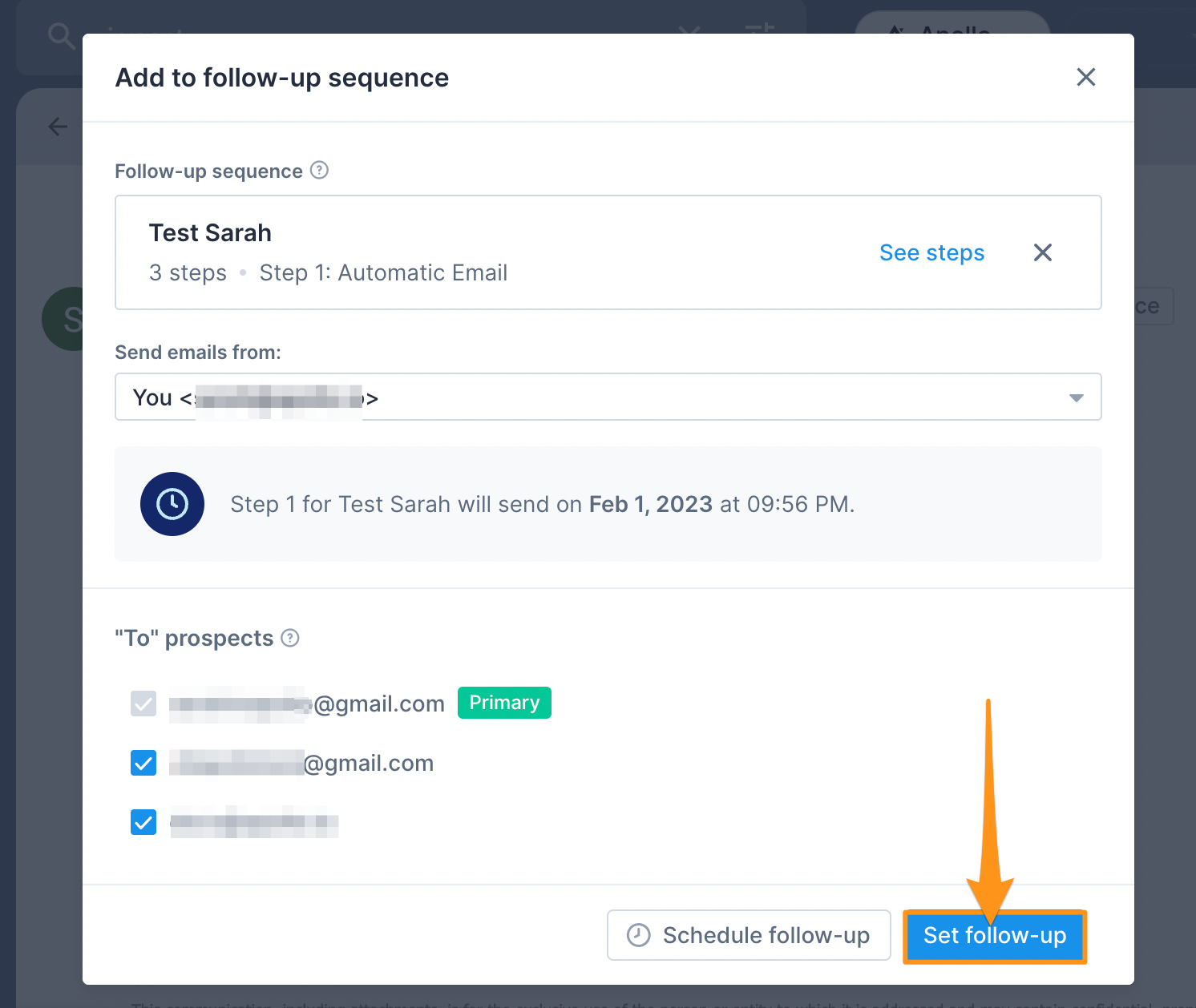
- Click Set follow-up to enroll the contacts in the follow-up sequence immediately.
- Alternatively, click Schedule follow-up and select a date and time for the follow-up sequence to begin.
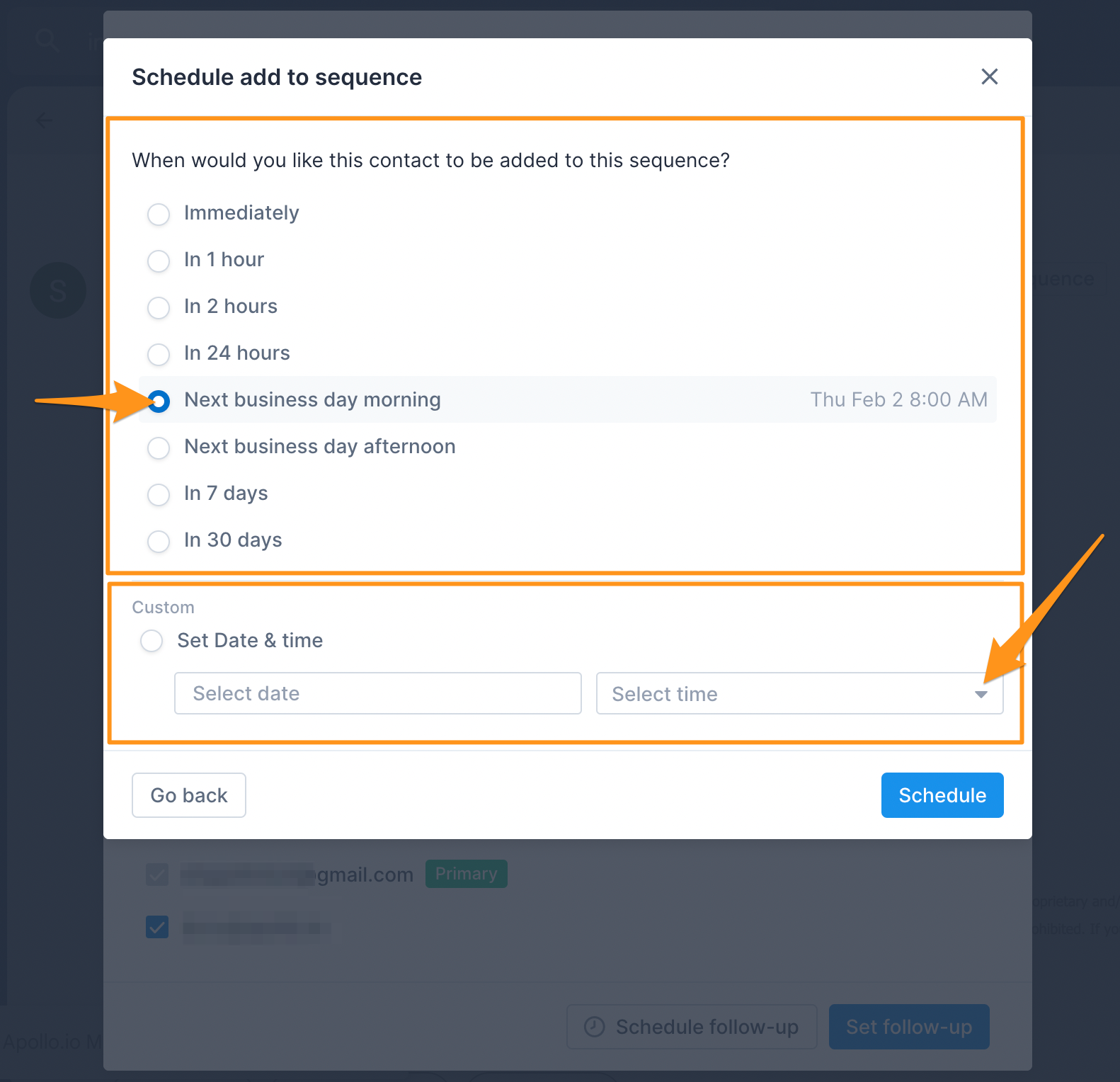
- When finished, click Schedule.
If the first step in your follow-up sequence is a task, such as a manual email or call, Apollo displays the next step in your Apollo tasks. Launch Apollo and click Tasks to execute the tasks in the follow-up sequence.
You have now added the recipients from your email into a follow-up sequence. If the first step in your follow-up sequence is an automatic email, Apollo sends the message within the same email thread in Gmail.
Next Steps
If you’re building a cleaner follow-up rhythm in Gmail, these are the next moves that’ll tighten everything up fast.
| Use the Apollo Chrome Extension in Gmail | Add templates, snippets, and nudges right inside Gmail to keep deals moving without bouncing between tabs. |
|---|---|
| Configure Chrome Extension Settings in Apollo | Lock in consistent behavior by tuning extension tracking and notification settings to match how you actually run outreach. |
| Configure a Sequence Sending Schedule | Stop blasting at weird hours by setting a sending schedule for sequences to hit inboxes when prospects are most likely to respond. |
| Email Tracking Overview | Turn follow-ups into a feedback loop by tracking opens, clicks, and replies to spot what’s working and cut what’s not. |