
Overview
If your team uses Microsoft Dynamics for a CRM, Apollo's integration with Microsoft Dynamics allows you to maintain data parity between both platforms. Use the integration to automatically sync contact and account data from your CRM, and choose when to sync data from Apollo to Microsoft Dynamics, reducing duplicative manual tasks and the risk of human error.
Check out the following sections to connect the Microsoft Dynamics integration.
Once connected, it can take some time for contacts and accounts to sync from Microsoft Dynamics to Apollo. The first record pull from Microsoft Dynamics takes about six hours. This gives your team time to configure integration settings.
You can only integrate one CRM with Apollo. If you already connected Salesforce or Hubspot, disconnect that integration before proceeding with Microsoft Dynamics.
Connect the Integration
You need permission to edit integration settings to configure integrations on Apollo. If you don't have permission, reach out to a team member for help.
Additionally, to enable the integration on Microsoft Dynamics 365, you must approve the integration via Entra ID app consent. If you're on a trial Sales environment, you may require additional privileges, including a Dataverse system administrator role, to connect the integration.
To integrate Microsoft Dynamics with Apollo:
- Launch Apollo and click Settings > Integrations.
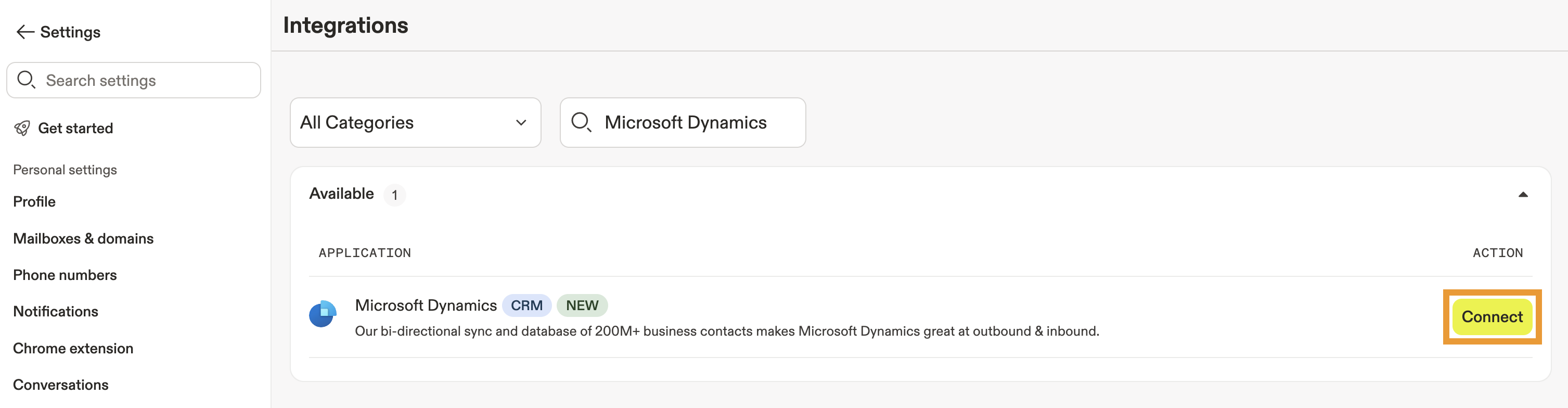
- Search for Microsoft Dynamics and click Connect.
- Review the account access and click Yes, Continue.
- If you haven't already, log in to your Microsoft Dynamics account. Review the permission settings, then click Accept.
You have now connected Microsoft Dynamics.
Next, map stages and fields and configure sync settings for the integration.
After connecting the integration, Apollo automatically pulls contacts and accounts from Microsoft Dynamics and de-duplicates them in Apollo. To control which records your team can view while prospecting in Apollo, configure record visibility in the sync settings.
Map Fields and Stages
Map fields and stages between Apollo and Microsoft Dynamics to ensure your data is represented correctly across both platforms.
Correctly mapping your fields allows you to sync data to Apollo to enrich your records. Fields left unmapped may not sync correctly.
When you connect your Microsoft Dynamics account, Apollo automatically syncs the following fields with Microsoft Dynamics by default:
| Sync type | Synced data |
|---|---|
| Apollo contact push |
|
| Apollo account push |
|
| Microsoft Dynamics contact pull |
|
| Microsoft Dynamics account pull |
|
Apollo auto-maps all the related fields found in Microsoft Dynamics, but you can make adjustments to the default field mapping, as well as map additional default and custom fields.
To map more fields:
- Launch Apollo and click Settings > Integrations.
- Click View beside Microsoft Dynamics.
- Click Contacts or Accounts > Fields.
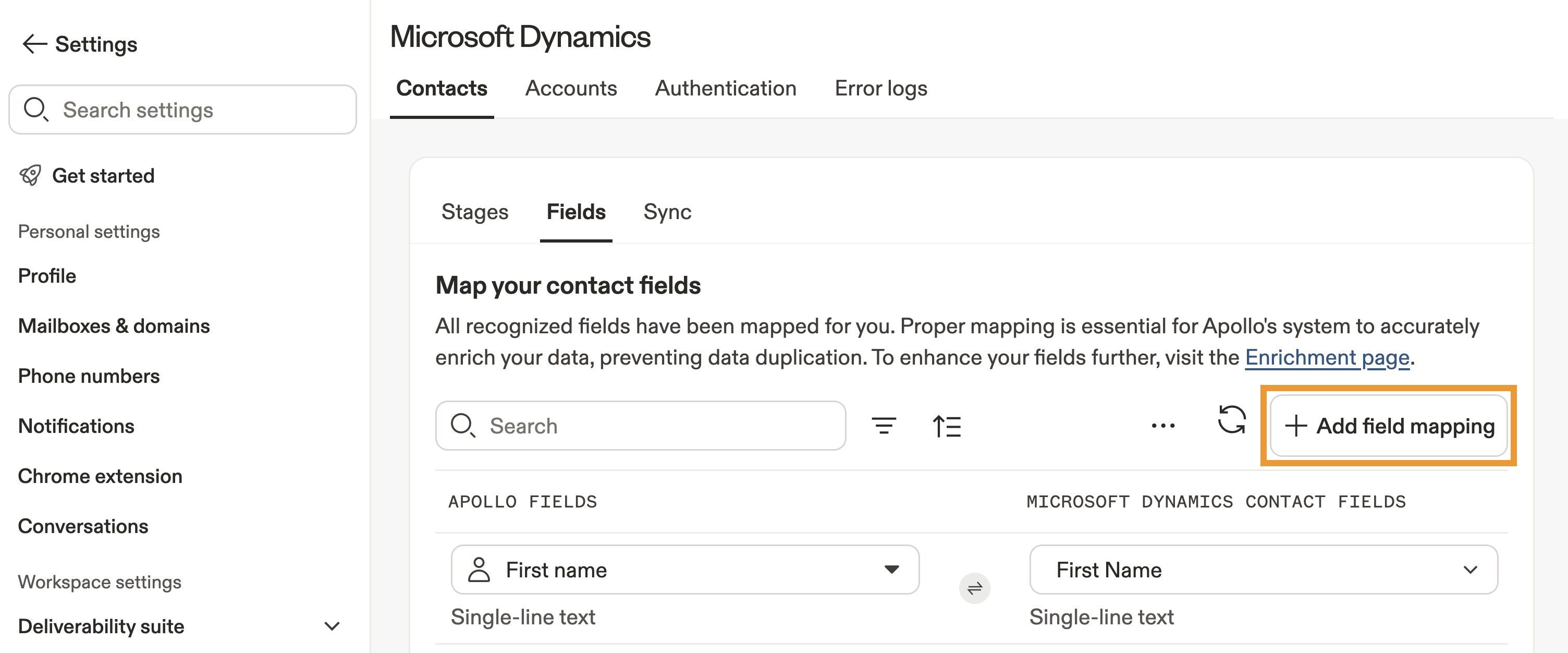
- Apollo automatically maps all recognized fields for you. Click Add field mapping to map additional fields, such as custom fields.
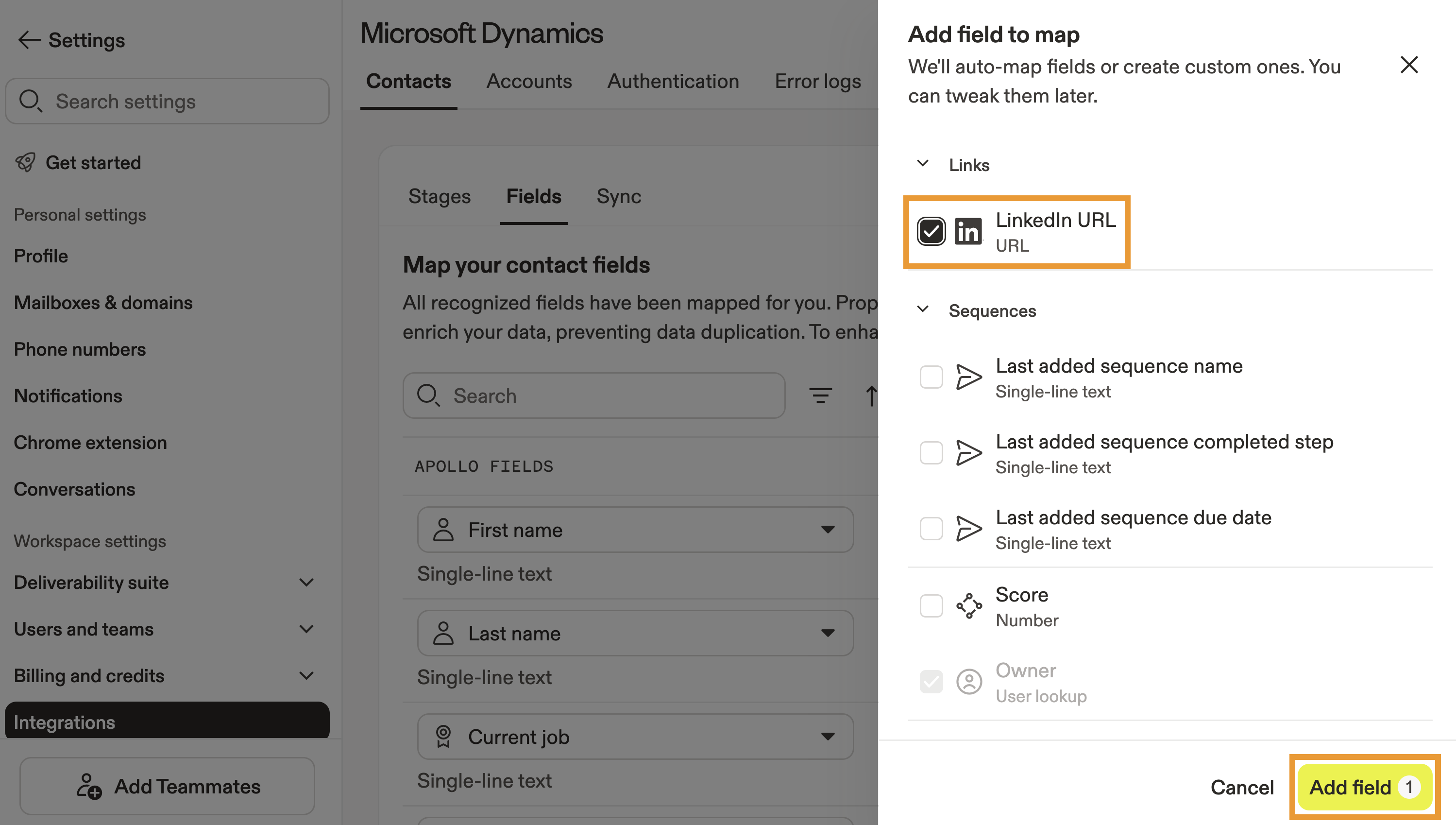
- Check the Apollo or Microsoft Dynamics fields you want to map, then click Add fields.
The do not call field syncs a contact's stored DNC status between Apollo and Microsoft Dynamics. To use this field, you must first enable DNC phone screening on Apollo.
Apollo only syncs the DNC status already stored for the contact. Apollo doesn't run a live DNC check during CRM sync.
- Map the field to the corresponding Apollo or Microsoft Dynamics field.
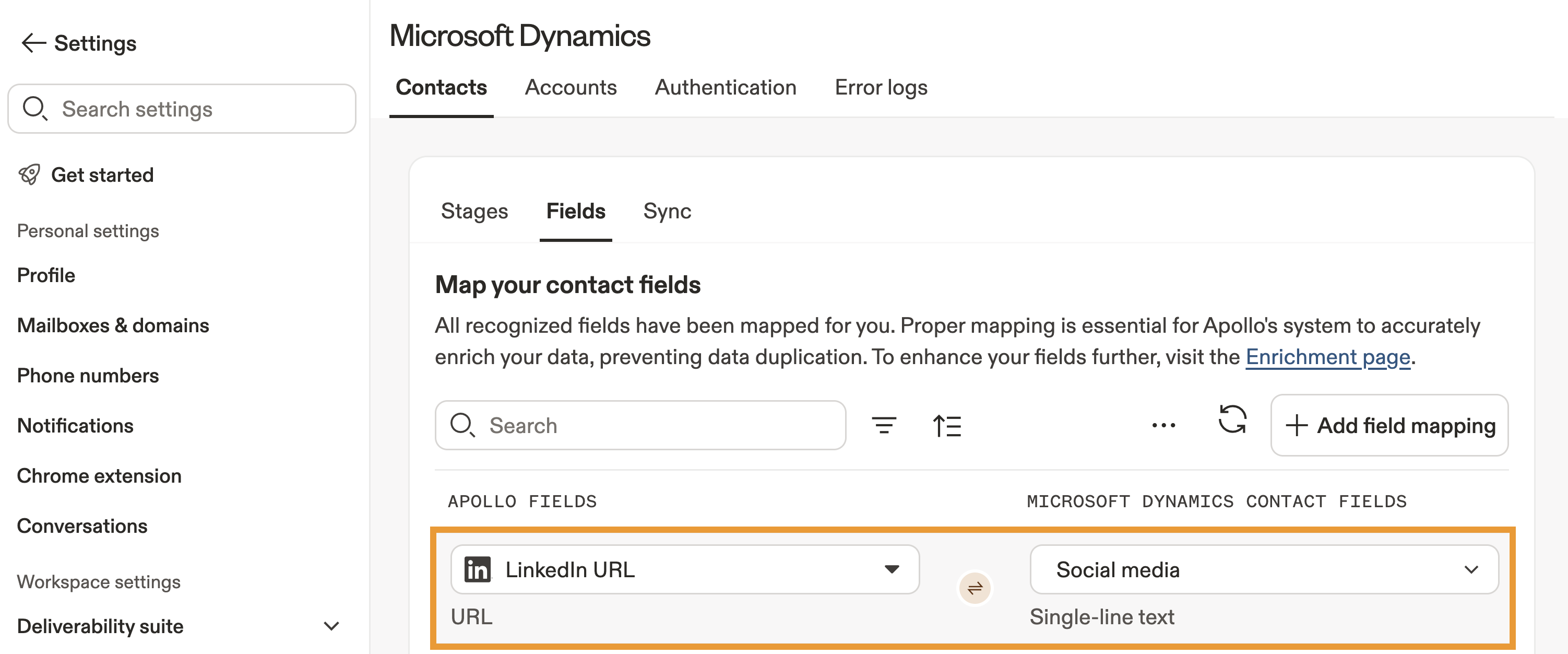
- Repeat this process for any other fields you want to map, then click Save.
You have now updated the field mapping for the Microsoft Dynamics integration.
Next, map stages for the integration.
Map Apollo stages to Microsoft Dynamics statuses to track where Microsoft Dynamics contacts or accounts are in your sales pipeline. Then you can reliably filter by stage when prospecting or engaging in Apollo.
Map stages automatically with auto-map, then make adjustments as necessary, or manually map all stages.
If an unmapped value from Microsoft Dynamics doesn't match a stage in Apollo, Apollo automatically creates a stage and maps the two together. If the value matches an existing stage, but that stage is already mapped to a different value, Apollo won't map the Microsoft Dynamics field to the existing stage and won't create a new stage to match the two since that would create a duplicate of an existing stage.
To map stages:
- Launch Apollo and click Settings > Integrations.
- Click View beside Microsoft Dynamics.
- Click Contacts or Accounts > Stages.
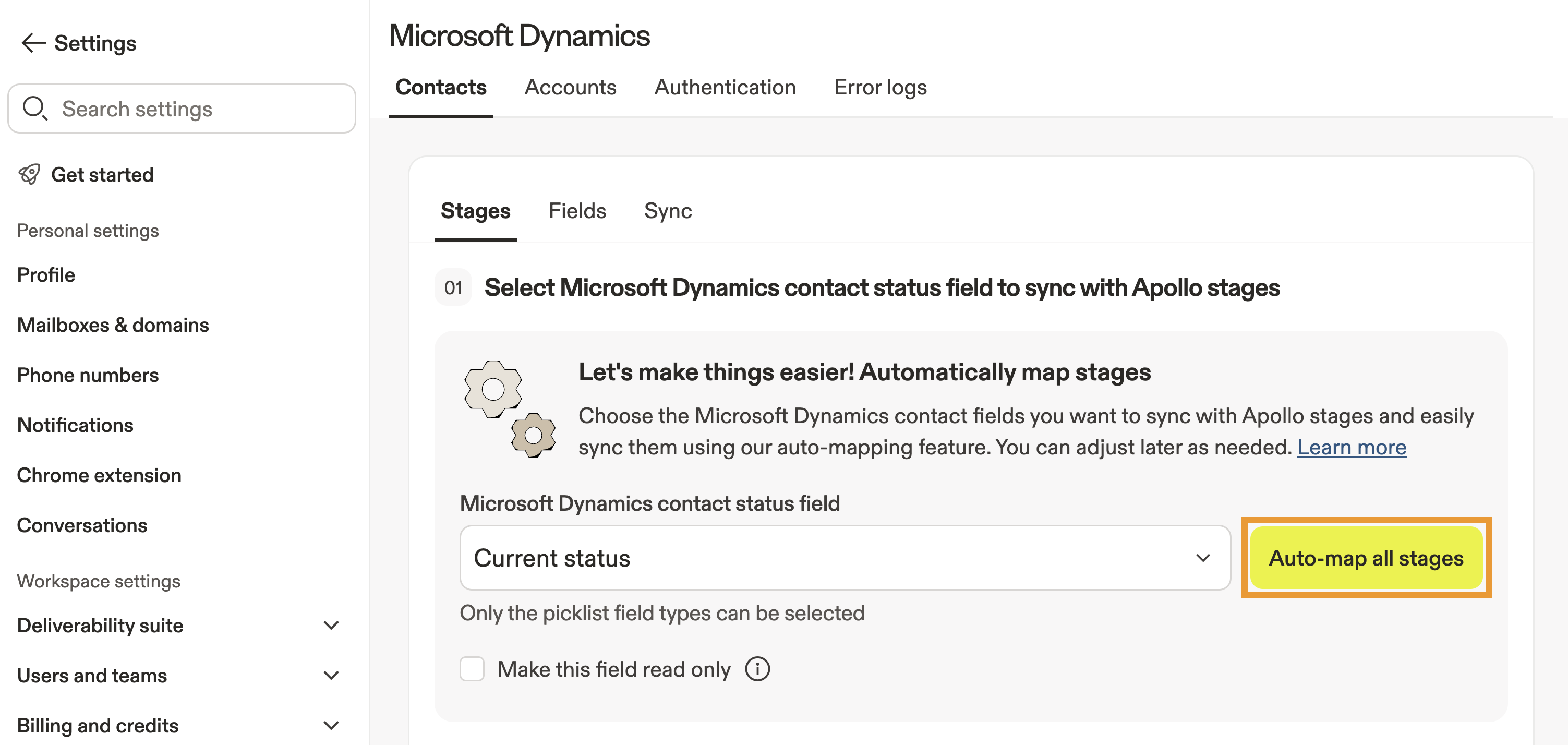
- Select a contact status field to sync with Apollo stages. Select a field from the dropdown, then click Auto-map all stages.
- Apollo automatically maps the status field you selected. Repeat this process for any additional mappings you want to create.
- Next, map contact stages manually by selecting a corresponding Microsoft Dynamics stage.
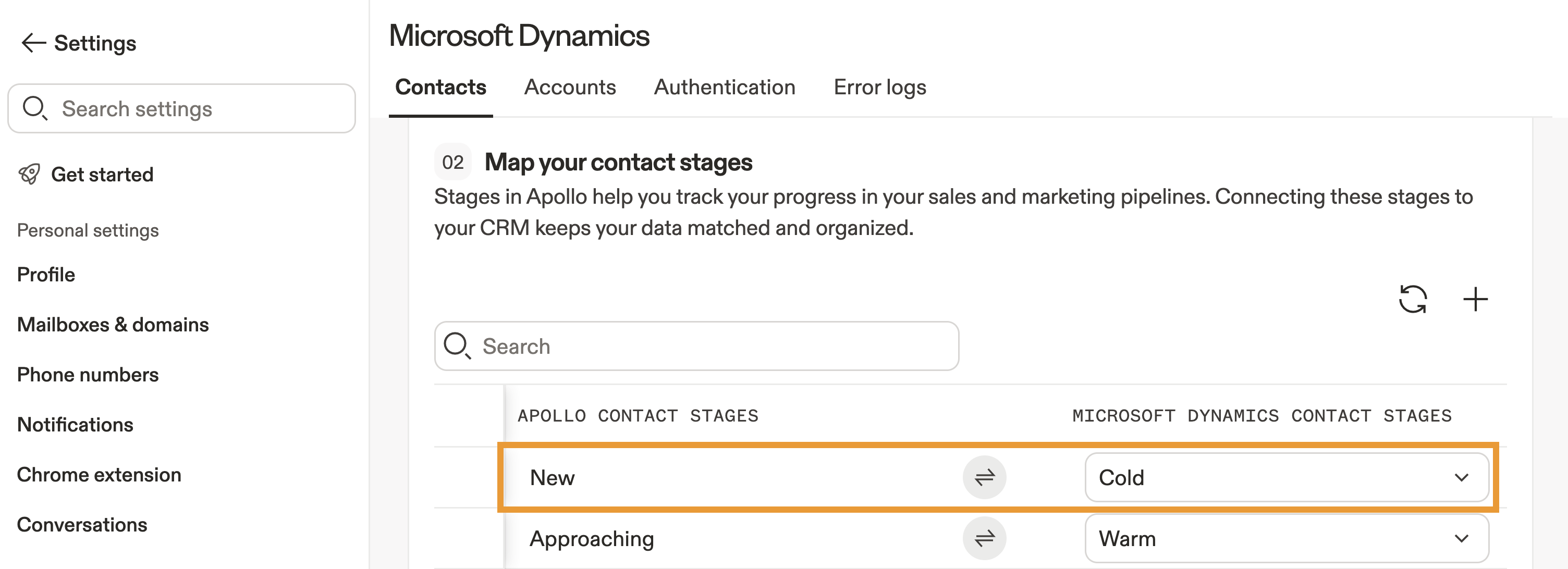
- Repeat this process for any other stages you want to map, then click Save.
Only map one Apollo stage to one Microsoft Dynamics status and vice versa. If you try to map the same Apollo stage to multiple Microsoft Dynamics statuses, or the same Microsoft Dynamics status to multiple Apollo stages, the integration may not function correctly and contacts could be assigned to unexpected stages.
After mapping stages, if you need to change the name of a Microsoft Dynamics status, delete a status, or add a new status, update your mapping in Apollo. If you delete a status in Microsoft Dynamics, delete the Apollo stage to which you mapped it and move the contact or accounts to an active stage.
You have now mapped stages for the Microsoft Dynamics integration.
Next, configure sync settings for the integration.
Configure Sync Settings
The first record pull from Microsoft Dynamics takes about six hours. This gives your team time to configure sync settings.
Apollo automatically pulls contacts and accounts from Microsoft Dynamics. You can configure when Apollo pushes data to Microsoft Dynamics and manage record visibility for contacts and accounts synced from Microsoft Dynamics.
To configure sync settings:
- Launch Apollo and click Settings > Integrations.
- Click View beside Microsoft Dynamics.
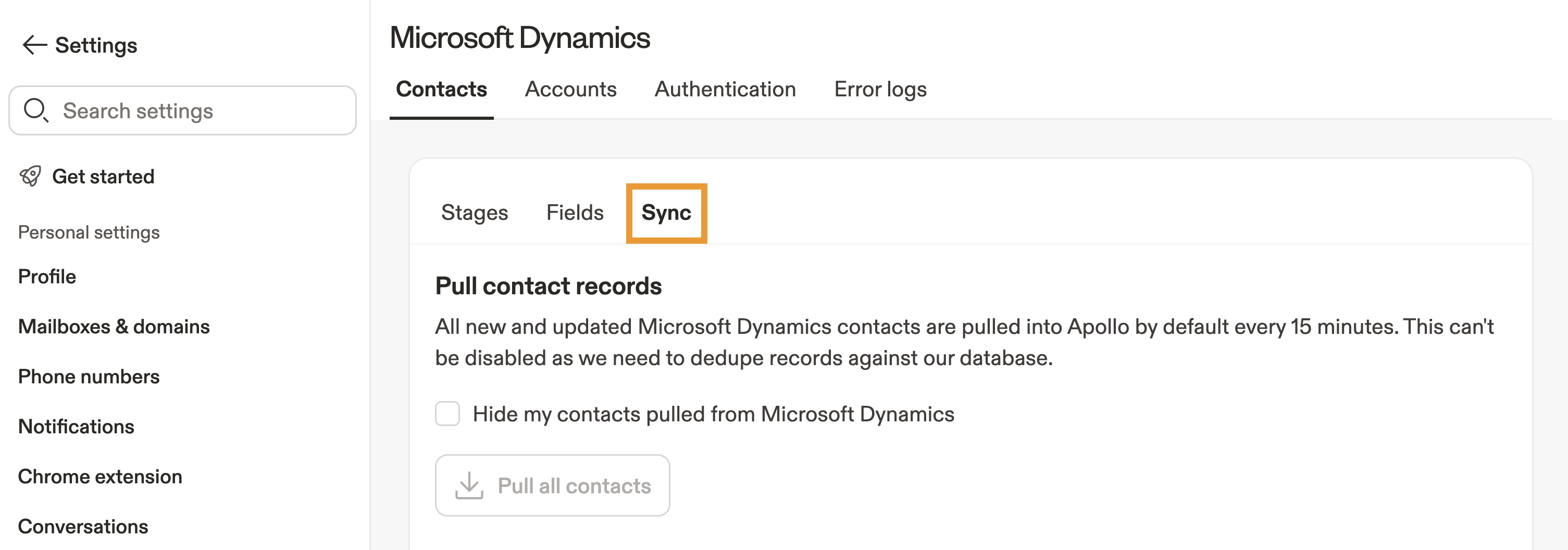
- Click Contacts or Accounts, then click Sync.
- Check Push Contacts or Push Accounts to automatically push newly created records to Microsoft Dynamics. This updates any contacts or accounts in Microsoft Dynamics whenever a field in Apollo changes. When Apollo pushes a contact, it also syncs the contact's account if it isn't already in Microsoft Dynamics.
With Push contacts or Push accounts unchecked, it isn't possible to manually push a prospect to Microsoft Dynamics.
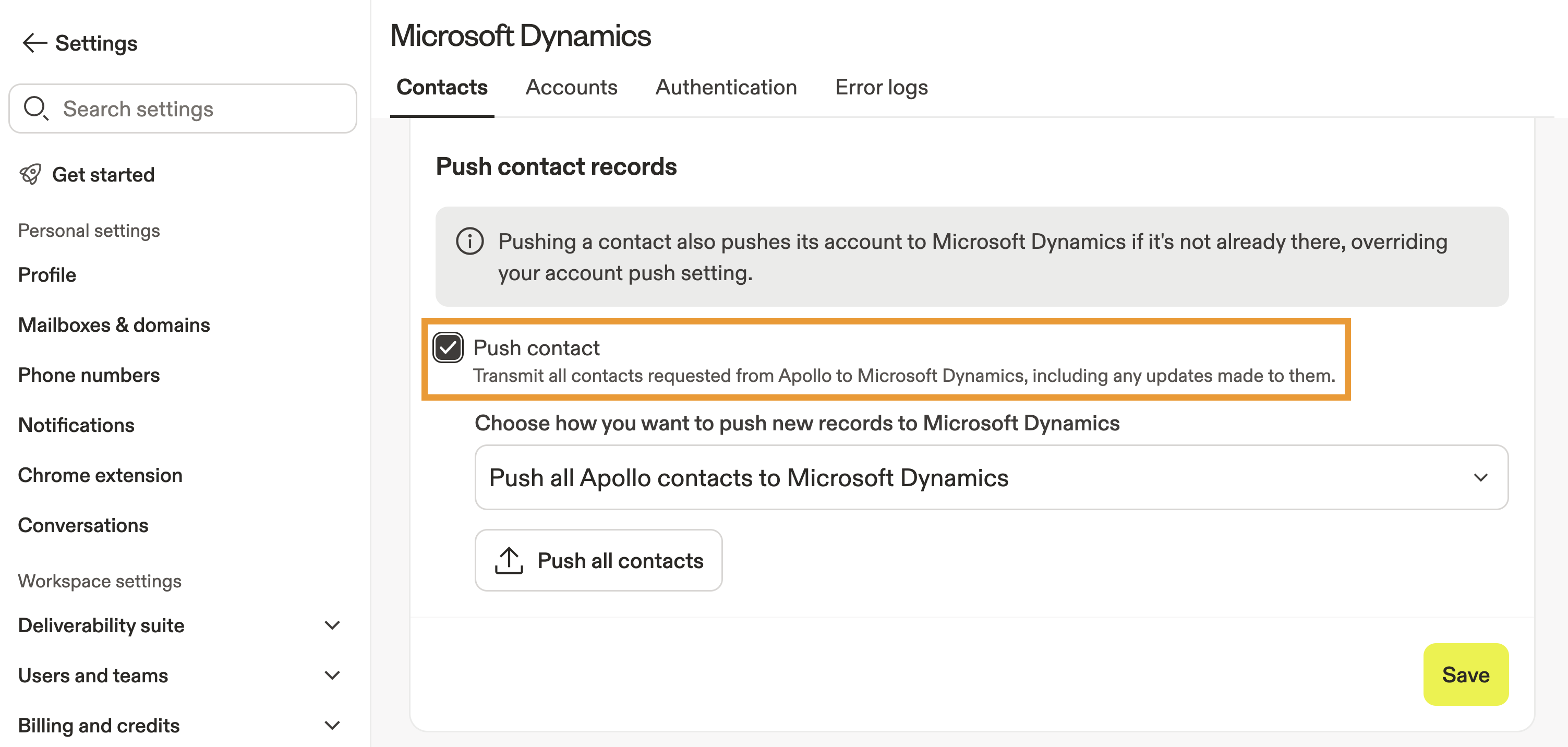
- (Optional) For contacts, choose from the dropdown whether to push all contacts or Only push contacts to Microsoft Dynamics based on certain stages, then select one or more stages. This means you only push contacts from Apollo on the stages you select. This may be useful for pushing interested or warm leads only, so you don't clutter up your CRM.
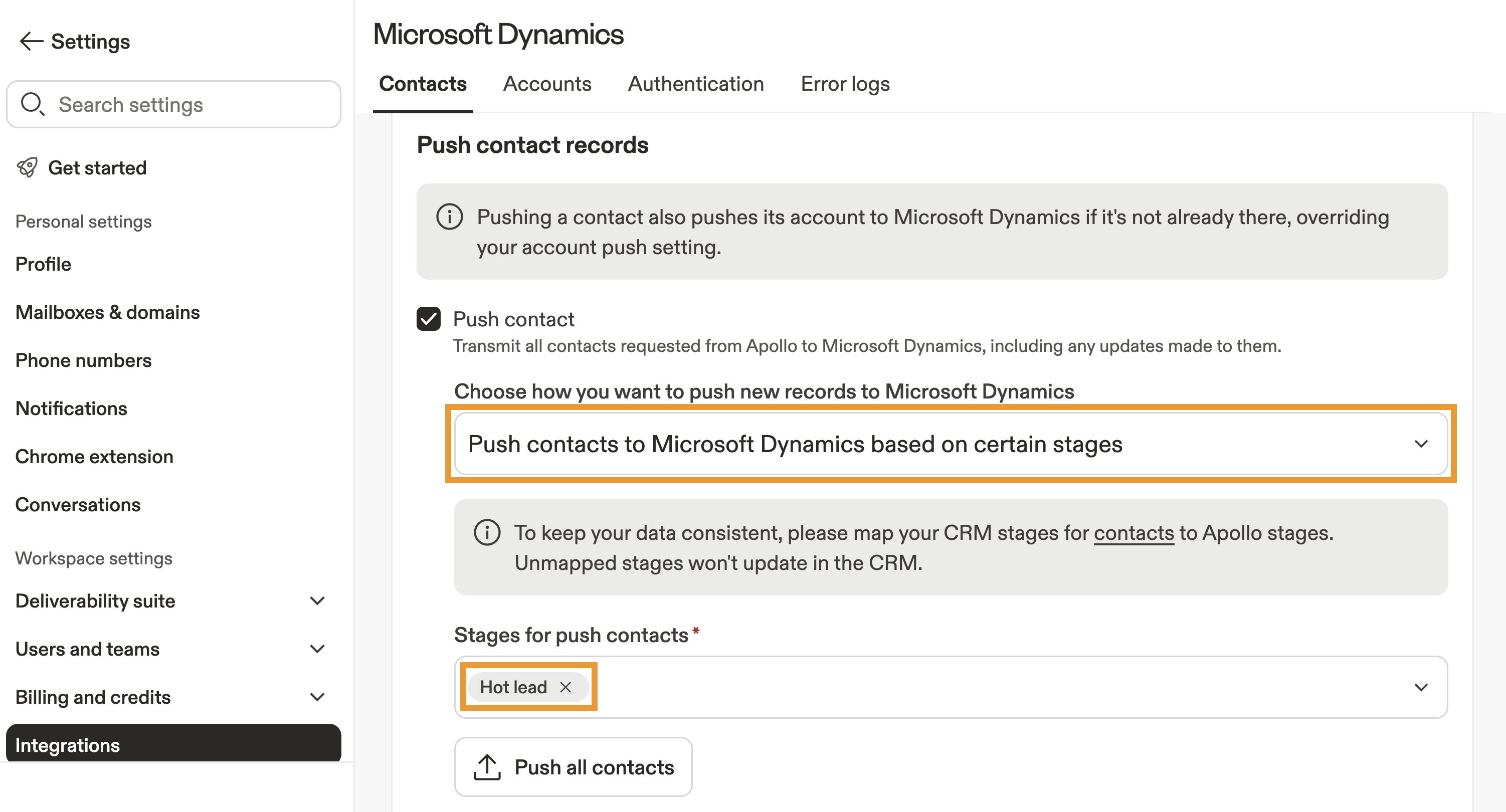
- When finished, click Save.
You have now configured push settings for the Microsoft Dynamics integration.
Record Visibility
Apollo enables record visibility by default so your team can search for and view Microsoft Dynamics records in Apollo. You can deactivate this setting if you don't want your team to view contacts and accounts synced from Microsoft Dynamics when prospecting in Apollo.
To update record visibility:
- Launch Apollo and click Settings > Integrations.
- Click View beside Microsoft Dynamics, then click > Contacts or Accounts > Sync.
- Check Hide my contacts pulled from Microsoft Dynamics, then click Save.
You have now configured record visibility for the Microsoft Dynamics integration.
Manually Sync from Microsoft Dynamics
The initial sync from Microsoft Dynamics can take a few hours. If a sync is in progress, starting manual sync restarts the process and delays completion time.
When you connect your account, Apollo automatically pulls contacts and accounts from Microsoft Dynamics. After you add or change a field or stage mapping, manually sync to apply the mapping to existing records.
To manually sync from Microsoft Dynamics:- Launch Apollo and click Integrations.
- Scroll to Microsoft Dynamics and click View.
- Click Contacts or Accounts > Sync.
- Click Push all Apollo contacts / accounts to apply Apollo data to existing Microsoft Dynamics records. Click Pull all Microsoft Dynamics contacts / accounts to apply Microsoft Dynamics data to existing Apollo records.
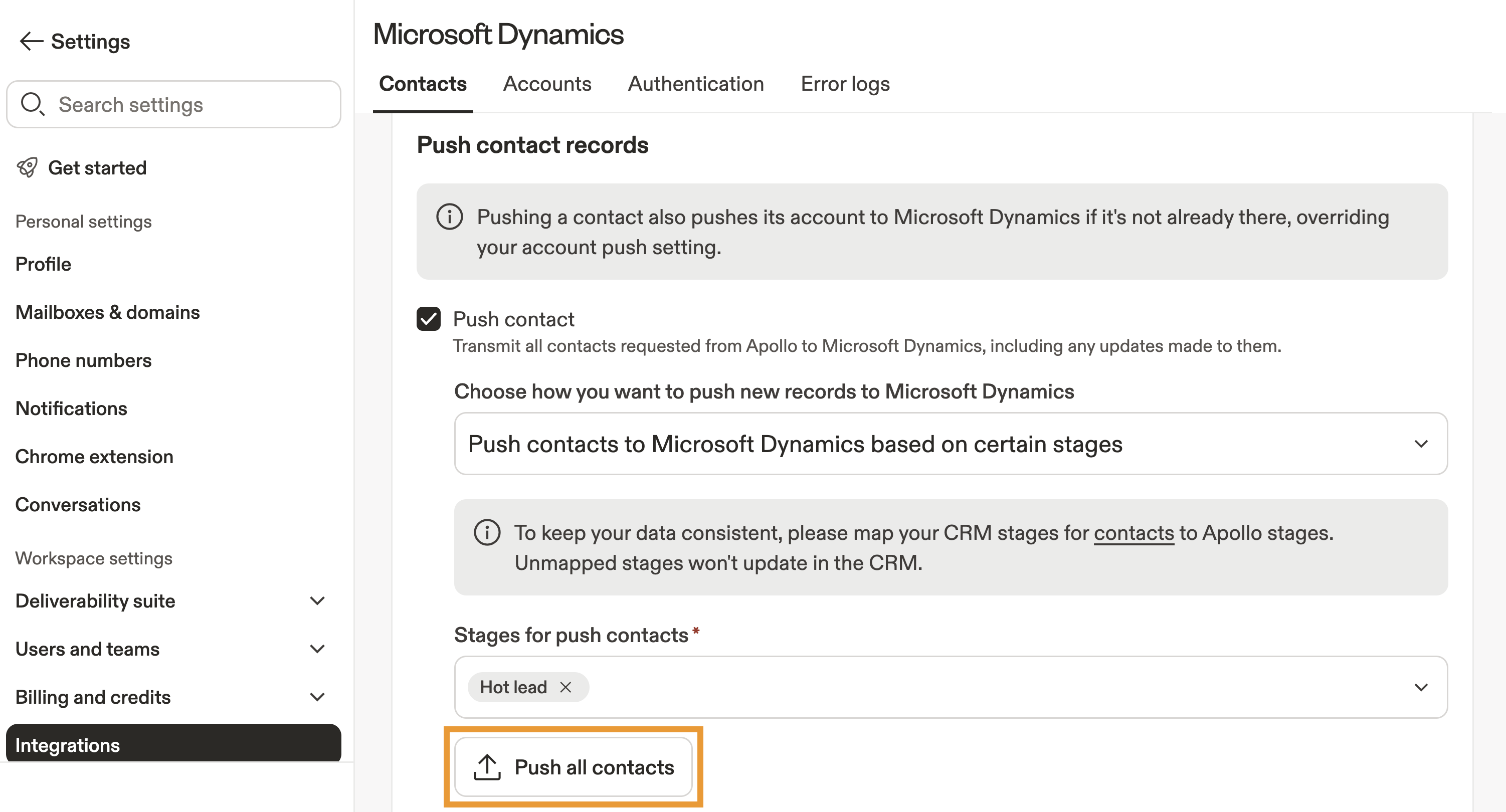
You have now manually synced records from Microsoft Dynamics.
FAQs
|
Frequently asked questions |
||
| How do I find records synced from Microsoft Dynamics? | How do I filter records by stage in Apollo? | How do I push an individual contact or account to Microsoft Dynamics? |
| How do I find records that I own? | ||
How do I find records synced from Microsoft Dynamics?
To filter prospects and view your records synced from Microsoft Dynamics:
- Launch Apollo and click People or Companies.
- Click Show filters > Source > Imported from CRM.
- Apollo displays the Microsoft Dynamics icon beside a contact's name.
You have now filtered prospects by records synced from Microsoft Dynamics.
Learn more about using the source filter.
How do I filter records by stage in Apollo?
To filter records by stage in Apollo:
- Launch Apollo and click People or Companies.
- Click Show filters > More filters, then click Stage.
- Check to include the contact or account stage you want to filter by.
- Click Apply filters and Apollo updates your search results with the filters you selected.
You have now filtered records by stage.
Learn more about using the stage filter.
How do I push an individual contact or account to Microsoft Dynamics?
First, ensure you've set sync settings to allow pushing contacts or accounts.
To push an individual contact or account from Apollo to Microsoft Dynamics:
- Launch Apollo and click People or Companies.
- Add search filters to find a person or company.
- Check one or more people or companies, then click Microsoft Dynamics > Push to Microsoft Dynamics.
You have now pushed a contact or account to Microsoft Dynamics.
How do I find records that I own?
To filter for synced records that you own:
- Launch Apollo and click People or Companies.
- Click Show filters > Owner, then select yourself as the contact or account owner from the dropdown.
You have now filtered for records that you own.
Learn more about using the owner filter.
Next Steps
Now that Microsoft Dynamics and Apollo are connected, here are a few practical next steps to keep your CRM clean and your pipeline moving.
| Search Filters Overview | Filter synced records to quickly find Microsoft Dynamics-imported contacts and focus outreach on the right stages to move deals forward. |
|---|---|
| Create and Assign Permission Profiles | Use permission profiles to restrict who can change integrations so your Microsoft Dynamics sync settings stay protected from accidental edits. |
| Create and Use a List | Start to organize synced contacts to build segmented lists your team can nurture with tailored sequences. |
| Use a Score Filter | Turn on apply scoring to highlight the Microsoft Dynamics records most likely to convert so your reps can prioritize outreach. |
| Save and Share a Search or Set a Search Alert | Use saved searches and alerts to get your team notified when new prospects enter your ideal segments. |